
 Written by Yasmin · 3 min read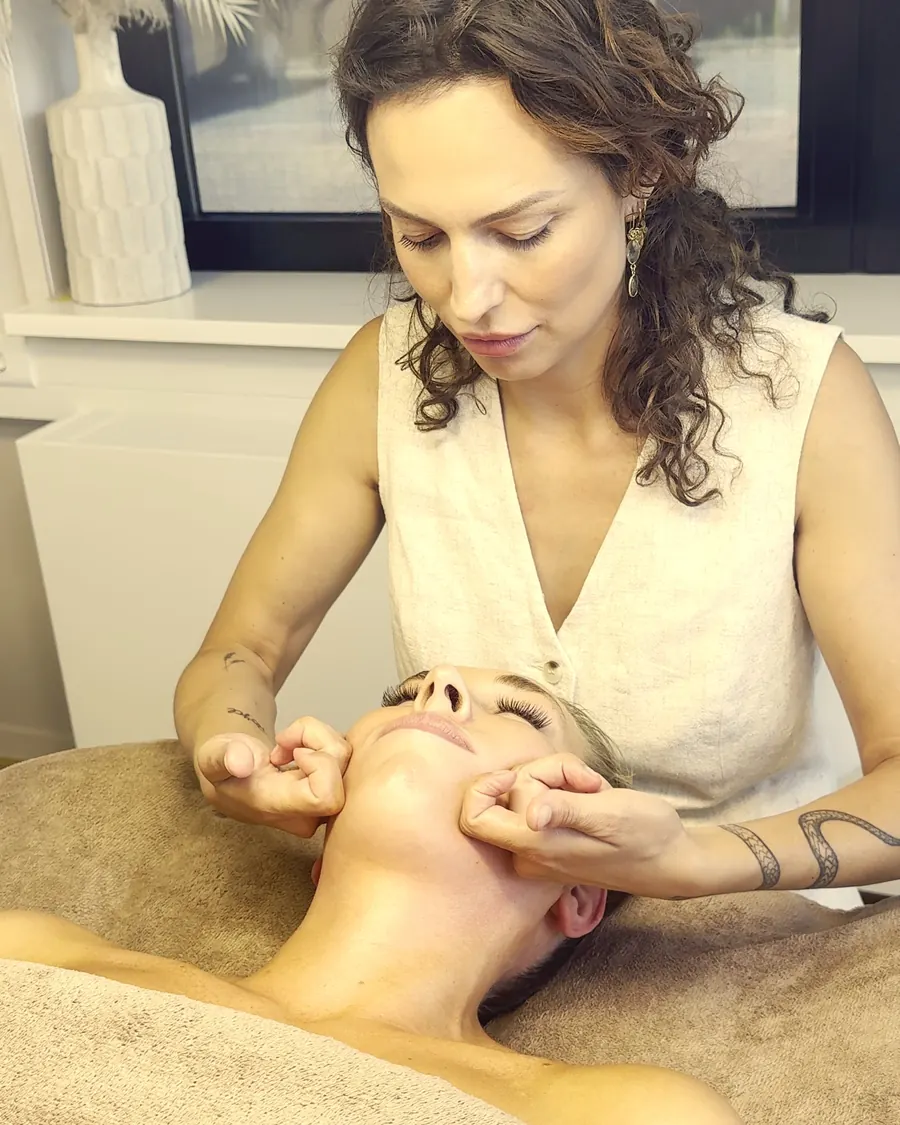
Jaw massage can help release tension in the chewing muscles, such as the masseter and the muscles around your temples. Many people who clench or grind say their jaw and face feel more relaxed afterwards. Massage does not remove the cause of grinding and is no replacement for your dentist, physiotherapist or GP.
You wake up and your jaw feels like it has been working all night. Or your dentist points out wear you never noticed. Sound familiar?
Why is there so much tension in my jaw?
Your jaw is one of the hardest-working parts of your body. You chew, talk, swallow and laugh. And when you have to push through something, your jaw sometimes does exactly that.
The masseter, the strong muscle under your cheekbone, is built for force. Under stress, focus or physical effort it often tightens along with you, without you noticing. At your desk during the day. In your sleep at night. What started as a response can slowly turn into a habit.
Tension in and around the jaw joint can go together with headaches, a sensitive face or a stiff neck. That doesn't mean the jaw is always the cause. It does mean everything is connected.
What can jaw massage do?
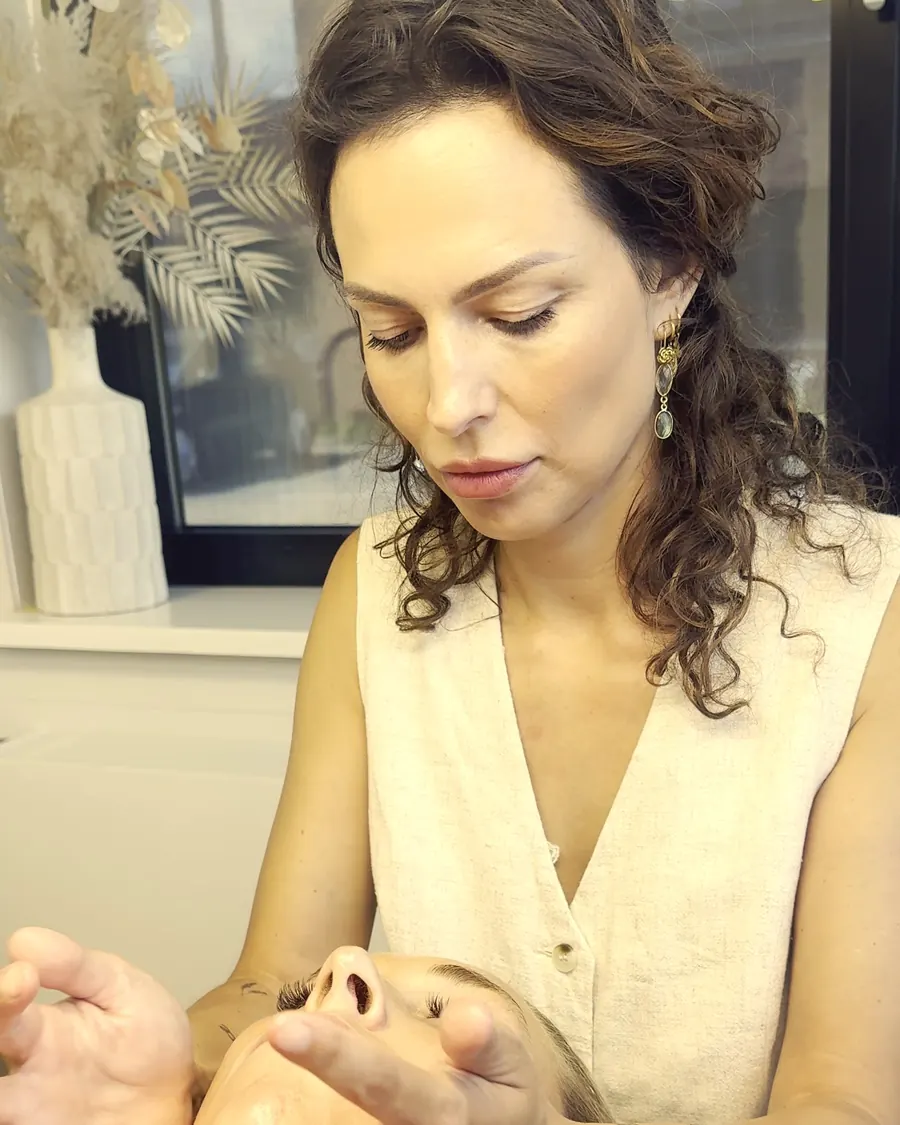
In a treatment I work on the muscles around your jaw, from the outside and, in Reveal and Beyond, also from inside the cheek. Slowly and attentively. Not forcing through resistance, but working with it.
- It can help release tension in your chewing muscles.
- Many people feel more space and movement in their jaw.
- It can contribute to a calmer feeling in your face, neck and head.
- It gives your nervous system a moment to switch out of "on" mode.
And perhaps most importantly: you start to notice where you hold on. After a treatment people often catch themselves clenching sooner. That awareness comes home with you.
What can't jaw massage do?
I want to be very clear here.
- Massage does not cure bruxism or take away the cause of grinding.
- It does not replace a night guard, splint or dental care.
- It is not a treatment for jaw joint problems such as clicking, locking or persistent pain.
If the pain doesn't go away, if opening your mouth is difficult, or if your jaw keeps clicking, see your dentist, physiotherapist or GP first. Jaw massage can be a pleasant addition alongside their care, if they agree.
How often should you get a jaw massage?
It depends on the person. Tension that has built up over years rarely disappears in one session. Many people choose a few treatments fairly close together, then come back now and then to maintain. We decide that together, based on how you feel.
There's also something you can do at home. Check in with your jaw a few times a day. Lips together, teeth apart, tongue resting against the roof of your mouth. Breathe. So simple, and so easy to forget.
Because sometimes you don't need to force your jaw to let go. Sometimes it just needs to remember what relaxed feels like.
Want to feel what happens when your jaw doesn't have to do anything for a while? Boek je behandeling. Reveal is the treatment where your jaw gets the most attention.
Jaw massage is no replacement for your dentist, physiotherapist or GP. Always have persistent symptoms checked.